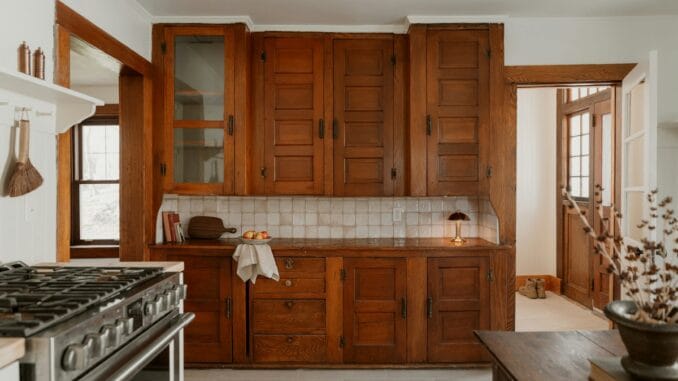
Natural materials have a way of making a kitchen feel warmer straight away, so of course, they’re very popular. You’re not trying to turn the space into a rustic cabin or going over the top; it’s just great to be able to choose finishes that feel solid, textured, and real – which might be harder than you think, until you think about it.
Photo by Clay Banks on Unsplash
Start With Wood
Wood is usually the easiest place to begin, and that might mean wooden cabinet doors, open shelving, or even just a solid timber worktop on an island. Wood adds warmth without trying too hard, and it works with almost any colour scheme. You don’t have to match everything perfectly either; slight variations in tone can actually make the space feel more relaxed.
Add Stone or Marble
Natural stone worktops, splashbacks, or even stone flooring bring texture and depth; they’re practical, durable, and they age well. A stone surface doesn’t look flat – it has variation, which makes the whole kitchen feel more interesting. If you’re thinking about a kitchen refurbishment from specialists like www.thekitchenrefurbishmentcompany.co.uk/, it’s worth considering where natural materials could make the biggest impact.
Think About Texture
Natural materials aren’t just about what you see, but how they feel, and clay tiles, linen blinds, woven bar stools, or brushed metal handles all add subtle layers.
Keep It Balanced
The key is not to overload the space – mixing wood, stone, and softer textures works best when there’s still room.
When they’re used well, natural materials simply make the kitchen feel comfortable.
Summary
This article gives tips for using natural materials in a kitchen. It recommends starting with wood, such as cabinet doors or a timber worktop, for warmth that works with most colour schemes, and adding natural stone or marble for durable surfaces that age well. It suggests layering in texture through clay tiles or woven bar stools, while keeping the look balanced rather than overloaded.
Questions this article raises
- How much more does a natural stone worktop typically cost than a laminate one?
- Which natural materials need the most upkeep in a busy kitchen?
- How do you avoid a natural-materials kitchen looking too rustic or busy?
