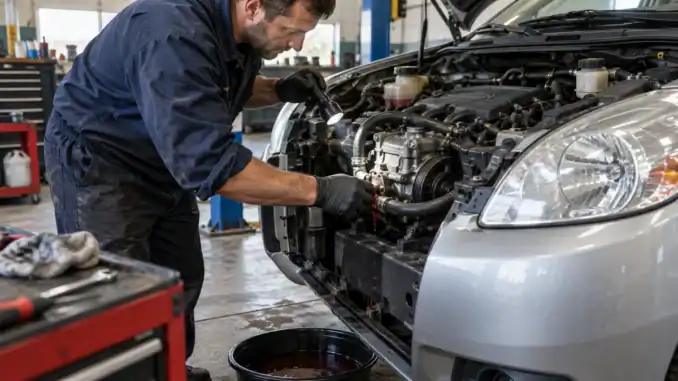
A power steering fluid leak on a Polo is worth finding out early on, because a small weep can quickly turn into a bigger problem with more costly repairs.
Where the Leak Usually Starts
Here are the 3 most common areas where power steering pump leaks occur, and what type of leak you can expect to find: 1. Shaft seal for the pump shaft, inside the pump casing. 2. Hose union for the high-pressure hose connected to the pump. 3. Reservoir inlet, where the reservoir tank for the power steering fluid connects to the power steering pump.
How a Small Leak Gets Worse
This means that running a system with low levels of power steering fluid will cause the pump to whistle, overheat, and wear its internal bearings very quickly. A weeping seal can very quickly develop into a seized pump, which can cost a lot to repair and often has to be replaced in its entirety. If you want a Volkswagen Polo Steering Pump, https://westernpowersteering.co.uk/vehicles/volkswagen/volkswagen-polo-steering-pump-2002-2014/ is a good place to start.
What a Mechanic Will Do
When Replacement Is Unavoidable
When a power steering pump starts to wear, it will start to cause problems and these need to be addressed as soon as possible. Often, problems with a power steering pump start with a cracked power steering pump body, a worn / scored power steering pump shaft or signs of internal wear, which can often be noticed by means of a groan or grabbing when steering. A simple seal repair will not be sufficient as the pump will already be showing signs of mechanical wear.
This has to be spotted early on to prevent bigger problems!
How a hydraulic system depends on every part
A power steering pump is one part of a hydraulic system, and the same logic applies to any hydraulic equipment. The job of the pump and its power unit is to supply pressurised fluid to the components that do the work. Fluid is held in a reservoir, and larger setups may also have a cooling system to keep it at a safe temperature.
Because each part relies on the others, a fault in one can stop the whole system. A failing seal, a worn motor or a poorly regulated pressure supply will all show up as poor performance elsewhere, which is why a small leak deserves attention before it spreads.
Regular maintenance is the best protection. Putting off checks leads to avoidable wear and tear, and that in turn means expensive downtime or a replacement part. Matching the size and capacity of the pump to the job also helps, since an undersized or oversized unit puts extra strain on the rest of the system.
Summary
This article explains how power steering fluid leaks develop on a Volkswagen Polo. It identifies the three most common leak points as the pump shaft seal, the hose union, and the reservoir inlet, and warns that running low on fluid makes the pump whistle, overheat and wear out its bearings. It stresses catching a small weeping seal early, since a badly worn pump needs replacement.
Questions this article raises
- How much does it typically cost to replace a power steering pump on a Polo?
- Can a weeping seal be fixed without replacing the whole pump if caught early enough?
- How often should power steering fluid levels be checked to catch a leak early?